
The CFO’s Compliance Checklist: Key Insurance Requirements and Where PCI Fits

Kirsten DApril 3, 2026

Tags:
Lorem ipsum dolor sit amet. Nibh ultricies senectus sed faucibus.
Insurance payment processing keeps daily operations moving. Service teams rely on it to advance policies, and owners depend on it for predictable cash flow and long-term customer trust. When payment systems feel slow or unclear, the impact spreads quickly across service, finance, and customer experience. At its core, effective payment processing supports clarity, timing, and confidence across the business.
Insurance payment processing includes the systems used to collect, route, track, and reconcile premium payments. It goes beyond simply accepting a payment. It covers everything from how funds are submitted to how they’re matched and confirmed.
A complete payment process answers several essential questions:
Insurance payment processing includes:
Because insurance payments often involve binding deadlines, installments, and premium financing, this process carries more complexity than standard ecommerce transactions.
Payment processing affects every team in an insurance operation. Friction usually appears first in service interactions, then creates cash flow gaps and operational strain across the business.
Clear payment processes shape the daily workload for service teams.
When payment handling works well:
When payment status remains unclear, service teams spend time tracking, checking, and explaining instead of supporting customers.
For business owners, payment processing influences both stability and reputation.
Reliable payment operations support:
Delayed payments reduce visibility into cash flow, manual steps increase strain on staff, and inconsistent experiences can erode trust over time. As insurance operations become more data-driven and interconnected, operational efficiency plays a growing role in sustaining performance across billing, servicing, and financial oversight.
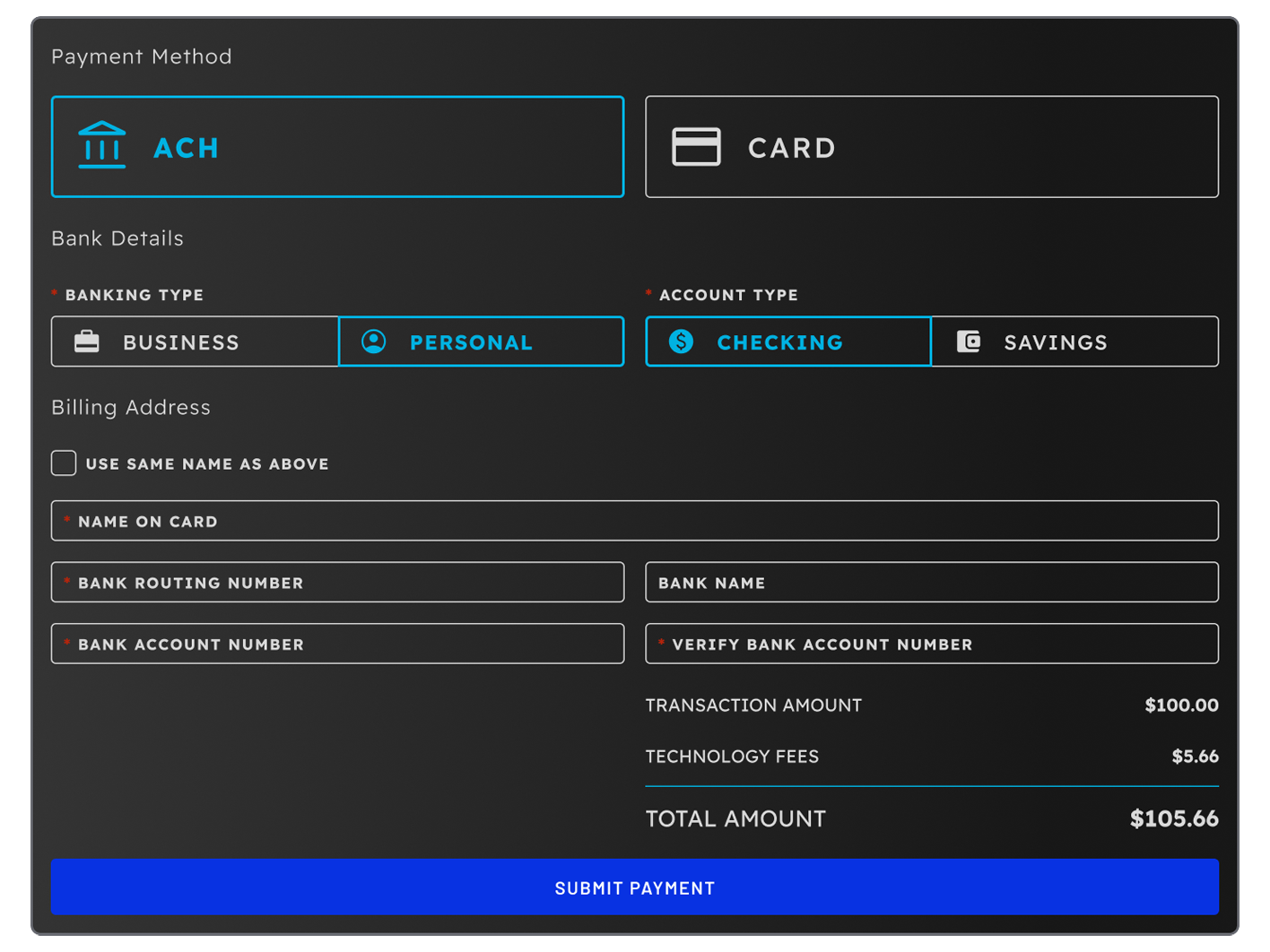
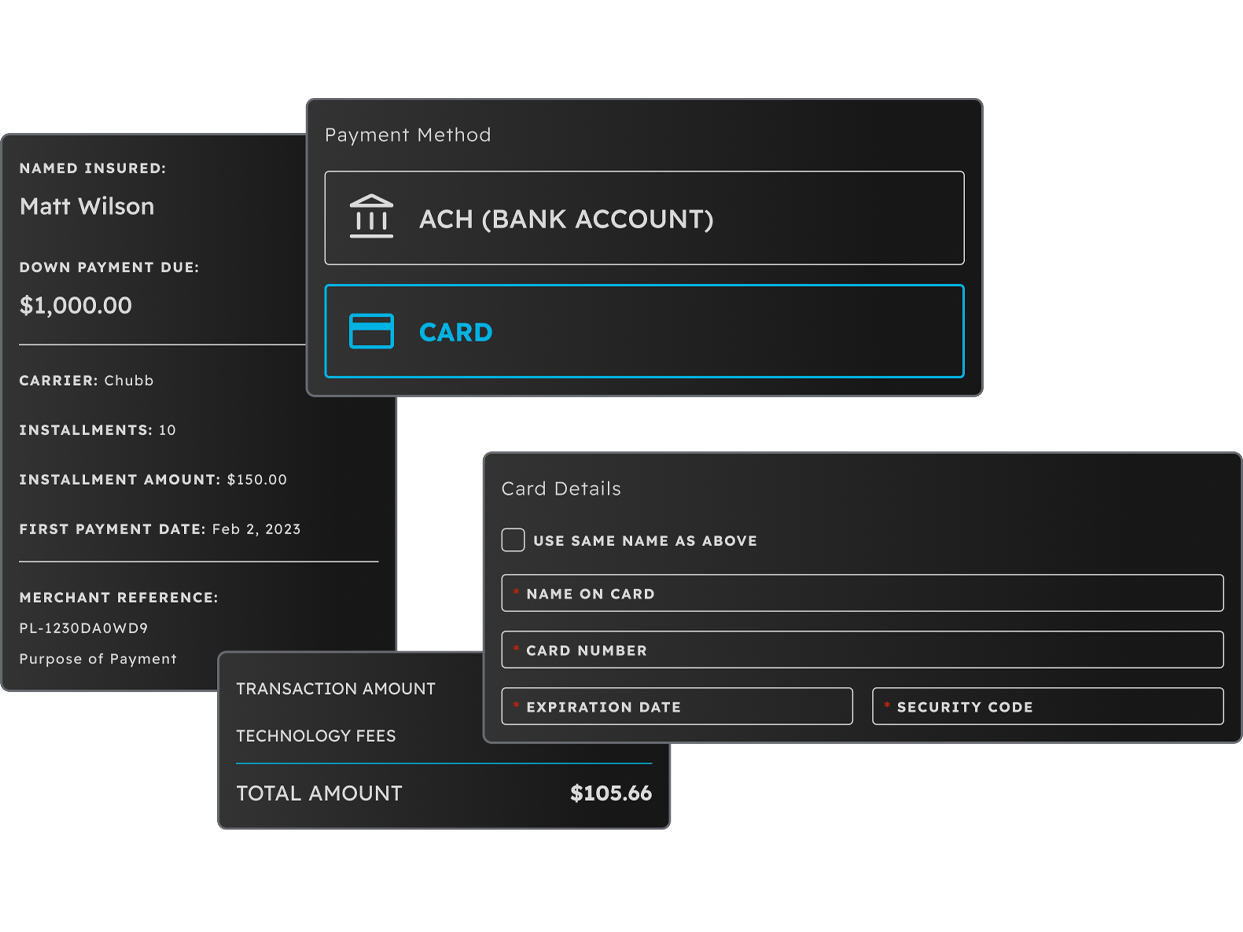
While specific tools may vary, insurance payment processing follows a predictable flow. Understanding each step helps teams identify where delays and confusion often begin.
Payment processing often operates behind the scenes, but it serves as the connective layer between payment collection, premium finance, and accounting. This foundational layer helps manage fund availability and ensures money moves in a way that supports both current operations and future growth.
Service teams send a payment link, invoice, or portal access to the customer. Clear instructions at this stage reduce friction later.
Customers complete payment using ACH or a credit card. Ease of use plays a major role in successful completion.
The payment moves through the appropriate network and enters a processing state. Payments may appear as pending before settlement. Errors or returns can occur during this stage.
The system matches the payment to the correct customer and policy. Accurate matching prevents downstream reporting issues.
Service teams and owners see updated payment status. Clear confirmation guides next steps and keeps work moving.
Even small gaps in the payment process can create friction. These issues often appear repeatedly across service and finance teams.
Payment delays often stem from incorrect customer information, bank verification holds, or manual review that slows settlement. ACH returns from incorrect account details are one of the most common issues across the industry and frequently require additional follow up before funds can be posted correctly.
When systems don’t connect, teams face duplicate work and inconsistent updates. Disconnected tools lead to duplicate data entry, missed updates between service and finance, and unclear ownership of follow ups. Approaches that balance automation with human oversight help reduce these gaps by keeping processes aligned and communication clear.
Customer friction often comes from unclear or complex steps. Too many screens, confusing instructions, and the lack of immediate confirmation can cause customers to assume something went wrong. This uncertainty increases inbound calls and slows payment completion.
Modern payment platforms designed for insurance focus on supporting existing processes while reducing manual effort.
With the right platform in place, teams can:
Coverage from Digital Insurance highlights how insurance specific technology supports modernization without disrupting established operations.
Insurance payment processing shapes service speed, staff workload, and customer confidence, and broader industry shifts toward technology that streamlines core operations reinforce why clarity and efficiency in payment workflows matter.
When payments move clearly and predictably:
The right setup supports familiar processes while reducing friction across the business.
Processing time depends on the payment method. ACH payments typically take 2 to 3 business days to settle, while card payments usually settle within 1 to 2 business days, depending on the processor.
Most customers expect digital options such as ACH and credit card, especially for speed and convenience.
Reconciliation issues often come from manual entry, disconnected tools, or unclear matching between payments and policies.
Ready to simplify how payments move through your agency? AndDone supports every step of the insurance payment process.